
What if the littlest humans on the planet, who are least vulnerable to COVID-19, are in fact most vulnerable to its indirect yet possibly avoidable effects?
What does research from previous outbreaks suggest? According to UNICEF:
“Experience with past epidemics like the 2014 West Africa Ebola outbreak and SARS has shown that indirect effects [upon children] of an outbreak…can be severe, sometimes outpacing the direct impact of the outbreak itself. Moreover, many of these indirect mortality effects may not be apparent for some time after the pandemic recedes and may even reverberate for an extended period following the pandemic.” (emphasis mine)
Because the impact upon little ones may not be felt immediately–unlike the COVID-19 mortalities we’ve witnessed so far, AND because the impact is indirect (and undoubtedly unintentional), it could be more easily overlooked. As a UN Policy Brief on “The Impact of COVID-19 on Children,” which is a somewhat dated (15 April 2020), begins:
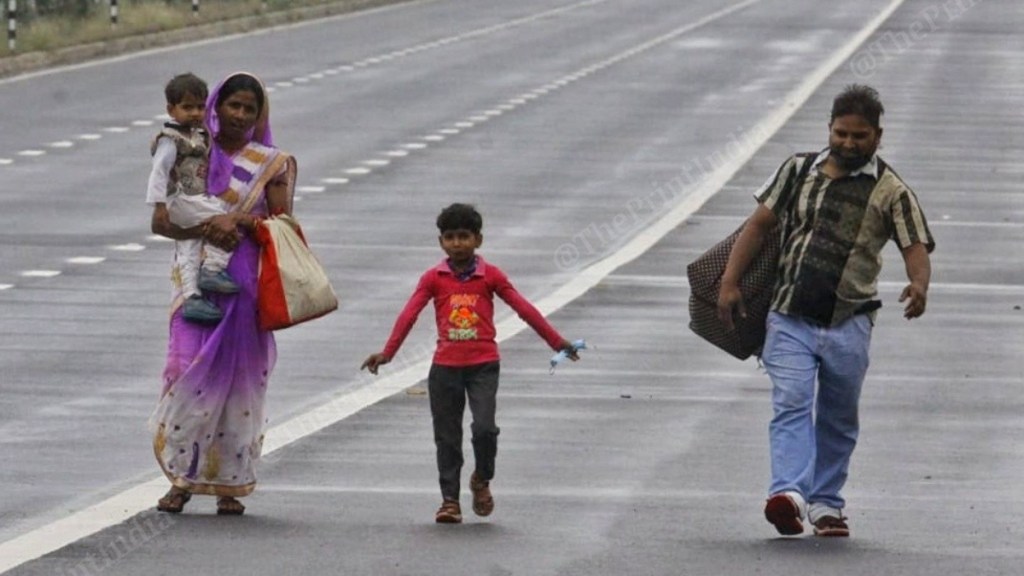
“Children are not the face of this pandemic. But they risk being among its greatest victims…. [M]itgation measures…may inadvertently do more harm than good.”
To state the logic (surely in an oversimplistic fashion), at least as I understand it:
the sudden economic contraction of the world’s major economies, due primarily to their respective nations’ lockdowns, will have a major, even catastrophic impact on the lives and livelihoods of the littlest ones in the least “developed” nations, due not only to a sharp decline in household income but to the greater unavailability of essentials like vaccinations, basic medical care, meals provided by schools, clean water, etc.
What follows–it must be stated–are estimates, estimates based on models. (And we’ve learned a lot about the “accuracy” of some models over this pandemic.) But I’m citing them, because it seems to me like they have not received the “air time” they deserve. I’m not remotely claiming to be comprehensive, or even fully competent, in communicating these statistics, and I’d eagerly welcome any all correction. (I’m obviously about as far from my own field of expertise as I could be.) So here it is:
– At present there are approximately 585 million children living in households that lack the “financial means to provide its members with basic goods and services deemed necessary for their survival and development” (this is UNICEF’s definition of “monetary poverty”; see here). Per a June 29th, 2020 estimate produced by UNICEF, this could increase by roughly 115 million–to around 700M–by the end of 2020; the impact would be most severe in sub-Saharan Africa.

The above mentioned UN Policy Brief provides a particular example, stating, “Financial diaries from 60 low-income households in the Hrishipara neighbourhood in central Bangladesh capture the sudden collapse of daily incomes when lockdown measures are introduced”: lockdowns initiated on March 26th, 2020, resulted in these 60 (already low-income) household incomes being reduced by an average of 75%. In addition, the policy brief notes that “Historically, the burden of such shocks on households have disproportionately been borne by girls.”
– It is estimated that worldwide vaccinations prevent the deaths of 2-3 million children each year. Measures aiming to reduce the spread of the virus have significantly inhibited children’s access to these vaccinations. A UNICEF webpage states that:
“Data collected by the WHO, UNICEF, Gavi, and the Sabin Vaccine Institute showed that country lockdowns measures had substantially hindered the delivery of immunization services in at least 68 countries, putting approximately 80 million children under the age of 1 at increased risk of contracting vaccine-preventable diseases.”
To be clear, these vaccinations protect from “child killers” like the measles.

– Measures taken to fight the pandemic have led to a reduction in the availability of basic medical care. A study produced by the John Hopkins Bloomberg School of Public Health cautiously discusses both “best case” and “worst case” models suggesting that, under current/projected conditions, between 250k and 1.2 million additional children, ages 0-5, could die in a six month period.
– According to the above-mentioned UN “Policy Brief,” just under 370 million children from 143 countries depend upon receiving daily meals from their schools. With the overwhelming majority of schools closed, they must find food elsewhere.
I’ll stop there, although I’ll mention that this article on the pandemic’s impact on maternal and infant/child nutrition is well worth reading. And I’ll state again both that (1) most of these statistics are from models, and that (2) they are neither comprehensive in their scope nor communicated in a fully competent (much less authoritative) manner.
It goes without saying that the loss of any human life is tragic. But there is an undeniable difference between the deaths of, say, a 70-year-old and a 7-day-old or 7-year-old. The former has had the opportunity to live a rather full life, whereas with the latter an entire future (including progeny) is lost. Further, no person of any dignity would ever suggest that American lives are somehow more important than the lives of anyone anywhere else.
An additional thought: If there is merit to the above, it seems altogether unhelpful (or at the very least simplistic) to pit public health concerns against economic concerns. It doesn’t seem too surprising that there would be massive, even catastrophic (global) public health ramifications from precipitous economic downturns in “industrialized” nations.
I’ll conclude with two sincere questions:
First, do we know how many (primarily elderly) lives our lockdowns are saving here in the States and other “developed” countries?
Second, do we know how many (children’s) lives those same lockdowns are ending (or irreparably impeding) in the rest of the world?
Who else is talking about this?

 Hope Unbroken