
The Old Testament books of Ezra-Nehemiah are truly intriguing with their impressive applicability to this election season. This shouldn’t surprise us too much: His Word is ever a compass in a given cultural moment, when responsibly interpreted.
That last phrase (“when responsibly interpreted”) is huge, especially when it comes to discerning the Bible’s posture toward all things political: the more confident we are of our political convictions, the more likely we are simply to “baptize” our biases with the Bible.
And that’s an altogether dangerous business.
So how do we avoid doing it? Isn’t the assertion that Ezra (or Exodus or the Apocalypse) offers insight into an American election more than a little iffy?
These are crucial and complex questions. Here are two relatively sound, if somewhat simplistic guardrails that can serve to keep us from at least some danger:
(1) compare the contexts: Here’s a key to interpreting any biblical book well: the Bible was written for us but not to us. To grasp its significance for us in our context, we must first grapple, to the extent possible, with its meaning to its original context. At the intersection of these two contexts, with all their similarities and differences, is an intriguing, intricate and often insightful exchange that has the potential to touch on an impressive array of topics.
(2) count the cost: If our conclusions come at no cost to us as Christians, if they are all too convenient for or compliant to our political convictions, then we’ve almost certainly co-opted the Bible to carry out our own crusade (again). We must consider and count the political cost of our Christian discipleship.
Let the reader be the judge as to whether or not I follow these and/or other crucial interpretive steps in what follows: to some extent, the proof of the pudding is in the eating.
Having taught an Old Testament survey course to seminary students for the past three years, I’ve become more and more interested in the political theology of the Old Testament, not least the books of Ezra-Nehemiah (which are, it seems, a unified work).
Ezra-Nehemiah recounts the struggle of the few Jews who returned (at various stages) from exile to Judah. Receiving special attention is the relationship of God’s people to (1) their political overlords and (2) their neighboring people groups, both with a view to promoting their praise to God and their spiritual/cultic purity within the world.
Here are a some observations that I think are especially important, or at least intriguing, for our present election season:
1. Pagan political authorities are unwitting agents in God’s plans for his people.
Ezra is eager to show that, while the tiny remnant of Jewish exiles are pawns in the hands of pagan princes, these same princes are puppets in the hands of “the God of heaven,” as its opening verse makes plain: “the LORD stirred the spirit of Cyrus king of Persia” to fulfill the words of his prophets concerning the return of his people, which, we hasten to add, first required the ruin of the Babylonian empire (also foretold by the prophets).
Take this in:

Ezra actually expects us to believe that Israel’s God, in order to return a tiny community of chronically unfaithful Israelites to their former land, has raised up a ruler first to raze a vast empire to the ground and then to resource his vulnerable exiles to get back home.
And the various post-exilic leaders, from Zerubbabel to Joshua to Ezra to Nehemiah, readily recognize this–with no little reveling and rejoicing (see Psalm 126):
– upon completing the temple, the people celebrate the Passover and Feast of Unleavened Bread “with joy, for the LORD had caused them to rejoice and [or: for] he had turned the heart of the king…toward them to aid them in the work of the house of God…” (Ezra 6.22);
– in response to Artaxerxes’ support of his journey back to Jerusalem, Ezra praises God, “Blessed be the LORD…who has put into the king’s heart such as this–to adorn the house of the LORD…” (Ezra 7.27).
I understand the Hebrew underlying the above italicized phrases that describe God’s intervention as focusing primarily on external end results, not on internal intermediate rationales: whatever these rulers’ motives, they were fulfilling God’s mission.
This should not be too surprising: if God had previously used pagan political power to punish his people (unwittingly–see, e.g., Isaiah 10.6-7), he could certainly use that same power to preserve and prosper his people, just as he had done through the pharaoh of Joseph’s day, according to Torah.
But if these powers are mere puppets in the hands of God, what does this mean for the posture that God’s people should take toward them?
2. While God’s people perceive these rulers as puppets, they neither promote nor reprove them.
Beyond thanksgiving to God for the way that He can use these rulers for His own ends, we find neither endorsement nor admonition coming from God’s people; that is, they neither champion nor chastise those in positions of supreme political power (interestingly, it’s arguably a different matter for local / regional authorities).
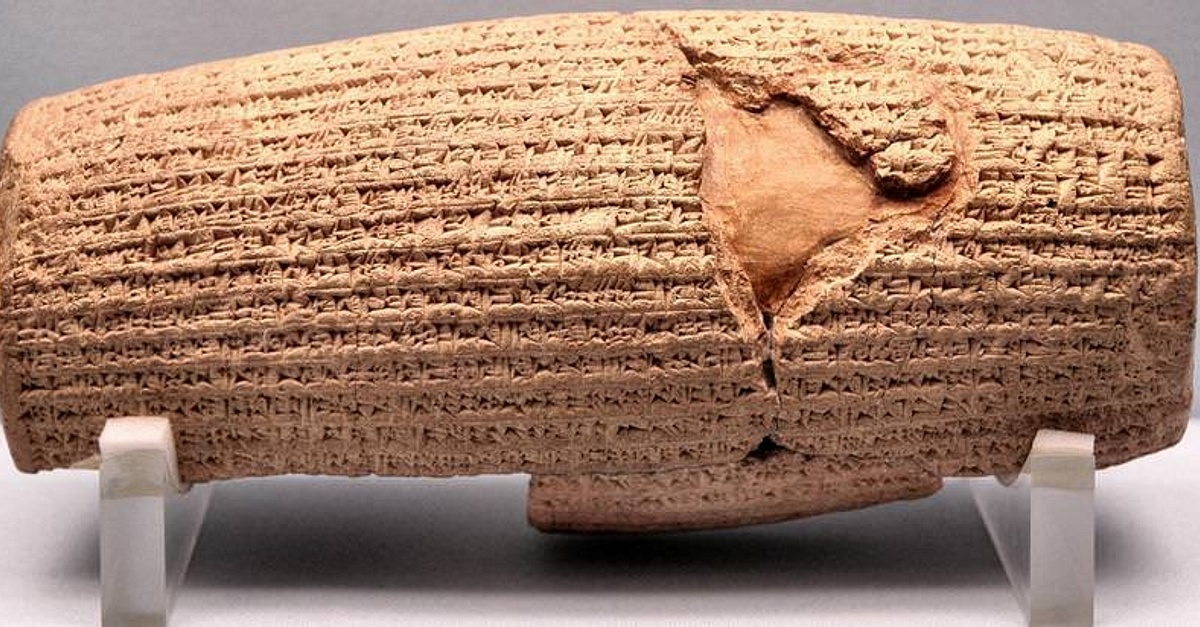
This is all the more interesting in that, at least in the case of King Cyrus, we find a pagan ruler claiming that he has Yahweh’s explicit approval to rebuild his temple (1.2). Not only that, but later King Darius provides animals for sacrifice at the Temple, “that they may offer pleasing sacrifices to the God of heaven and pray for the life of the king and his sons,” decreeing the death penalty for any opposition (Ezra 6.10).
Undoubtedly, these rulers were acting out of political and religious expediency. Interestingly, the Persian dynasty (known to history as the Achaemenids) is noteworthy for its “peculiarly liberal policy…towards the religious sensibilities of their subjects,” such that Ezra-Nehemiah compellingly displays “the advantages of a politically quietist position,” says H.G.M. Williamson, the Regis Professor of Hebrew (emeritus) at Oxford University.
Political quietism, eh?

Given that we Americans are already loud, I wonder if any of us still louder American evangelicals could ever embrace such a quietism? Have not both conservative and progressive Christians bought into the predictably perennial claim that this election season “everything is at stake” and that “this is the most important election in our history,” etc.?
In Ezra-Nehemiah, however, rulers come and go. But they mostly go.
The “political quietism” of Ezra-Nehemiah is hardly uncommon for the Old Testament. As Michael Walzer, the brilliant political theorist and professor emeritus at the Institute for Advanced Study in Princeton, concludes, “The biblical writers are engaged in politics, but they are in an important sense….not very interested in politics. Or, better, a few of the writers are interested, some are indifferent, and some are actively hostile” (from In God’s Shadow: Politics in the Hebrew Bible).
Of course, Walzer knows that the Old Testament is deeply concerned about how to shape our common life (hence, the book); it just doesn’t see structures of political governance as of much help (Walzer flatly states, “Political theory is a Greek invention”). On the whole, political structures are a hindrance, even a horror–but, even then, God has a good laugh and horrifies them in return (so Ps. 2). And when they do happen to help, it’s a heavenly-ordained “happenstance,” at least according to Ezra-Nehemiah.
One wonders, then, if Ezra or Nehemiah were 21st-century Americans, if they were asked about the upcoming election, they would say, “Meh. I’m not sure it’s all that newsworthy.” (For good or bad, I envisage a young John Cleese dressed in ancient Jewish garb, saying he “can’t be bothered” by all these American evangelicals “carrying on.”)

In sum, these rulers are anything but Gentile proselytes or “God-fearers”; they are largely unwitting agents of the divine will, acting out of political and religious expediency. Yet we hear no rebukes from God’s people–why expect wolves to act like sheep?–nor are there any reservations about using the resources these rulers have provided. But, again, nor do we hear of any glowing endorsement or affiliation–why board a sinking ship? Or, to switch back to the earlier metaphor, why on earth would we trust a wolf in sheep’s clothing?
Let me attempt to apply this to our present context: American evangelical claims that “character matters,” whether those claims were made yesteryear (in the days of the so-called Moral Majority, applied to, e.g., former President Bill Clinton) or yesterday (applied regularly to President Donald Trump), are perhaps noteworthy but largely naïve: what do we expect–and why?
Here is no implicit defense of President Trump; but it is a critique of former Vice President Joe Biden: does our biblical anthropology actually allow us to buy the present progressivist (and undoubtedly politicized) claim that “character matters” and that Joe Biden is a “better man” than the sitting president? Just yesterday Glenn Greenwald, who founded Intercept, resigned, because editors refused to publish a piece he wrote until he first “remove all sections critical of Democratic presidential candidate Joe Biden” (here). Hats off to Greenwald for his uncommon courage in a sea of journalistic conformity and cowardice.

For both candidates, their personas and “character” are largely constructs, carefully crafted by their campaigns and further doctored–whether demonized or deified–by the news media, whose character is perhaps the most appalling of all. In a time when brilliant voices are being silenced–e.g., Andrew Sullivan (formerly at New York Magazine) or Bari Weiss (formerly at the New York Times) and presidential scandals endlessly investigated based on specious “dossiers,” one might justifiably wonder if we have any more genuine knowledge of our highest leaders and their true character than did the Jew of Ezra’s day have of his or her overlords.
But we would be mistaken if we confused this “political quietism” with either a defeated capitulation or a distracted complacency. Within Ezra-Nehemiah is a deep lament of their present enslaved status (a result of their spiritual infidelity) and a longing for a consolation that can come only through divine (vs. mere political) agency (Neh. 9.32-38). In their day God had indeed fulfilled part of the prophetic post-exilic vision, using unwitting princes and a willing people, and so they had all the more reason to humbly seek its complete fulfillment, first and foremost through prayer and the spiritual purification of their own community, not political activism.
3. Even though these rulers are puppets fulfilling God’s plans, for all their power, they prove of surprisingly little help, relative to the prophetic word and prayer.
Throughout Ezra-Nehemiah, political power provides some of the means but never the motivation for God’s people to rebuild the temple and the city walls. Political power, it seems, can offer more provision than empowerment, empowerment at least to do the things that matter most for a community–namely, the soul-inspiring, identity-creating, values-shaping, future-imagining work that happens–how and where in Ezra-Nehemiah?–through Torah and at the Temple in Jerusalem. In fact, even with the imprimatur of Cyrus (and the later assistance of Darius), opposition to the rebuilding of the temple would result in its completion some 23 long years after Cyrus’s edict.
Apparently, not even emperors are that efficient or effective. (And, if you know anything about how astonishingly capable Cyrus the Great was…)
Why is this?

In part, it’s because royal political backing ebbed and flowed, due to political and ethnic conflict at the local level (Ezra 4). It wouldn’t be the first or last time that centralized governance was sabotaged by local conflicts, complexities, and corruption.
By contrast, it seems undeniable that only the prophetic word–whether embodied in the contemporary prophets Zechariah and Haggai or already inscribed in ancient Torah–could animate hearts to actually do the work of rebuilding, as stated in Ezra 5.1-2 and made explicit in the Aramaic of Ezra 6.14:
“So the elders of the Jews were building and thriving by means of the prophesying of Haggai the prophet and Zechariah… and they built and completed it according to the will of the God of Israel…”
Similarly, the promises of Deuteronomy provide the animus for Nehemiah to plan and propose his seemingly impossible venture to the king (Neh. 1.8-9), and it is Ezra’s reading and explaining of Torah (Neh. 8) and subsequent prayer (Neh. 9) that result in the community rending their hearts and renewing their covenant with God (Neh. 10).
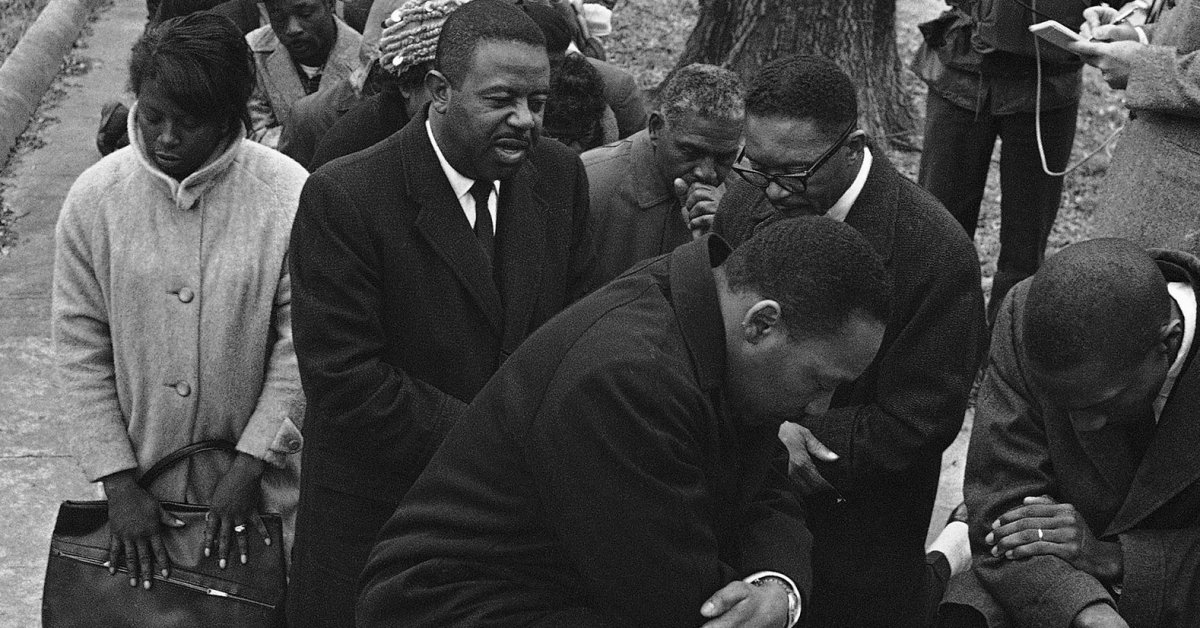
Those familiar with the leaders of the civil rights movement of the 1950-60s will know that, for many of them, it was precisely the prophetic tradition that both defined and drove their courageous efforts (see David Chappell’s magisterial A Stone of Hope: Prophetic Religion and the Death of Jim Crow. The ideological engine of the Black Lives Matter movement not only runs on a completely different fuel but is designed differently, not least because of the social media environment in which it has flourished).
But this prophetic word is supplemented by prayer. In Ezra-Nehemiah prayer is not only alluded to regularly but allocated significant literary space, as entire chapters constitute prayers of confession and supplication.
In short, for Ezra-Nehemiah when it comes to investing in meaningful cultural renewal, the currency of political power, whether progressive or conservative, can be grossly overvalued–so why on earth should it be a source of division among the faithful? To the extent that American Christians buy into the lie that political power is a crucial agent of cultural transformation–viz., that it is a god that can get us back to the Garden, they will surely divide and fall.
To attempt one contemporary application: if we are convinced that racism still perniciously infects the souls and systems of America today, despite the last 60 years of court rulings, congressional legislations and executive orders, isn’t it finally time to look for solutions that are themselves outside that hopelessly racist system? A leading voice in discussions of racism in America today, Columbia University Professor of Linguistics John McWhorter has provocatively concluded, “Black Americans achieved so very much when racism was open, immediate, and implacable than they have since the civil rights revolutions of the 1960s…. The fundamental idea that black people must have a certain amount of political ‘representation’ as a precondition for significant achievement is a fallacy.”
As Cornel West famously proposed–or, more like preached–to Anderson Cooper this past May, “It looks as if the system cannot reform itself. We’ve tried black faces in high places. Too often our black politicians, professors, professional class, middle class become too accommodated… you got a neoliberal wing of the Democratic party that… doesn’t really know what to do because all they want is [to] show more black faces, but so often these black faces are losing legitimacy too, because the Black Lives Matter movement emerged under a Black president, a Black attorney general, and a Black Homeland Security–and they couldn’t deliver…. We have to recognize that…like Tupac Shakur [says] ‘I’ve got some thug in me.’ I know I got some gangster in me; as a Christian, I got to fight it every day… So then the question becomes: how do we keep alive moral, spiritual standards… and stay in contact with the humanity of all of us across the board….?”
Ezra-Nehemiah’s answer?

through the prophets and prayer, not princes or presidents and their policies.
And what’s so incredible and attractive about Ezra-Nehemiah is that, aside from the mind-boggling reality that Israel’s God raises up Cyrus, there are otherwise no divine “wonders” or “signs” (unlike in Exodus): the incredible accomplishments of a rebuilt temple and walls are accomplished through the “ordinary” means of Word, prayer, and sacrament. Neh. 4-6 is truly a remarkable narrative: somehow Nehemiah and the fearless families of make-shift warrior-builders defy all odds and overcome.
4. God’s people are passionately protective of their worship and community life and impressively public about their weaknesses.
If the Jewish leaders and laity of Ezra-Nehemiah would yawn after 10-15 minutes of American political discussion, then what would suddenly awaken and impassion them?
The protection and promotion of the worship of Israel’s God.
Upon commencing the work of rebuilding the temple (in Ezra 4), neighboring peoples offer to help with the work–why?–because, as they explain to the Jewish leadership, “like you, we seek your God and have been sacrificing to him since the time of Esarhaddon, king of Assyria, who brought us here” (4.2).
This request is met with an emphatic “No way!”, which many of my students, being the good evangelicals that they are, almost universally regard as a missed opportunity that leads to altogether unnecessary and unfortunate conflict. But as any politician knows, and as Joseph Blenkinsopp, Professor emeritus of biblical studies at Notre Dame explains, with any support offered comes strings attached: “an offer to share the labor…would have been taken to entail, and would in fact have entailed, a share in controlling the temple itself with all that that implied.”

To risk yet another contemporary application: the year 2020 has witnessed unprecedented political influence upon the capacity of God’s people to gather for worship. Without commenting on the so-called “lockdowns,” I am alarmed by the overwhelming complacency with which so many Christians have approached their personal and, at times, public worship life. I fear that “the worries of this age” will have lifelong spiritual repercussions in the way that any “frog in the kettle” peril will. Refreshingly, if soberly, Ezra-Nehemiah recognizes that if God’s people approach the crucial matter of worship casually, they will end up casualties.
Ezra-Nehemiah gives an invaluably concrete criterion for discerning if God’s people are protecting and promoting the praise of Israel’s God: it will make enemies. The inescapable social and political consequences of the Shema will bring charges of religious and social exclusivism and political sedition.
In addition to being passionate about the protection and promotion of worship, Ezra-Nehemiah underscores Israel’s chronic incapacity to be true to the commitments she had made both to her Lord and to one another as a community: the beautiful prayer of confession preceding the community’s covenant renewal declares Israel’s “original sin” to be “wickedness” (the Hebrew root רשׁע); this “wickedness” can be precisely defined:
to be “wicked” is to pretend to be committed; it is to make promises but, when their fulfillment is found to be somehow problematic or inconvenient, they are abandoned.
“In all that has happened to us, you [God] have been righteous, for you have acted faithfully, while we acted wickedly” (Neh. 9.33; note the contrasting terms in italics).
In our contemporary, informal parlance, it is called “bailing,” and, as David Brooks wrote 3ish years ago, we live in “The Golden Age of Bailing.” Then, earlier this month he wrote an extended piece in the Atlantic (here) on the deep loss of trust that Americans have “in our institutions, our politics, and in one another.”

And are we American evangelicals in any way an exception? I can’t see that we are. We have largely agreed with the late modern redefinition of fidelity as being true to oneself, never mind that, on the whole, that it is only through intact families, friendships, and faith communities that we in time come to discover who we actually are.
Today, both political parties in America stand firmly united in supporting the underlying ideology that legitimizes this redefinition of fidelity and thus causes this collapse of trust (or “wickedness”): the Western project of classical liberalism that tragically redefines “freedom” as the absence of any constraint on personal choice, as brilliantly articulated by Notre Dame political science professor Patrick Deneen in Why Liberalism Failed and by Polish philosopher, politician and professor Ryszard Legutko in The Demon in Democracy.
Ezra-Nehemiah, then, might just encourage American evangelical ministers to preach not about why “character matters” (so progressives) or even about “the evil of abortion” (so conservatives) but rather about what underlies both of these abominations–namely, the unconstrained worship of personal choice, which has both its conservative and progressive manifestations.
5. Human communities differ in their fundamental allegiances and values, with the result that some flourish or fail more than others.
Here is perhaps, at least in our present cultural moment, the most controversial social and political claim that Ezra-Nehemiah makes–and painfully and imperfectly illustrates.
Today to suggest that some human communities (which throughout world history have largely gathered by ethnicity and, thus, skin color) are on trajectories of either progress or regression is altogether suspect. It is “racist.” The idea that communal disparities (in, e.g., household income or incarceration rates) are unquestionably demonstrations of discrimination is dogma.
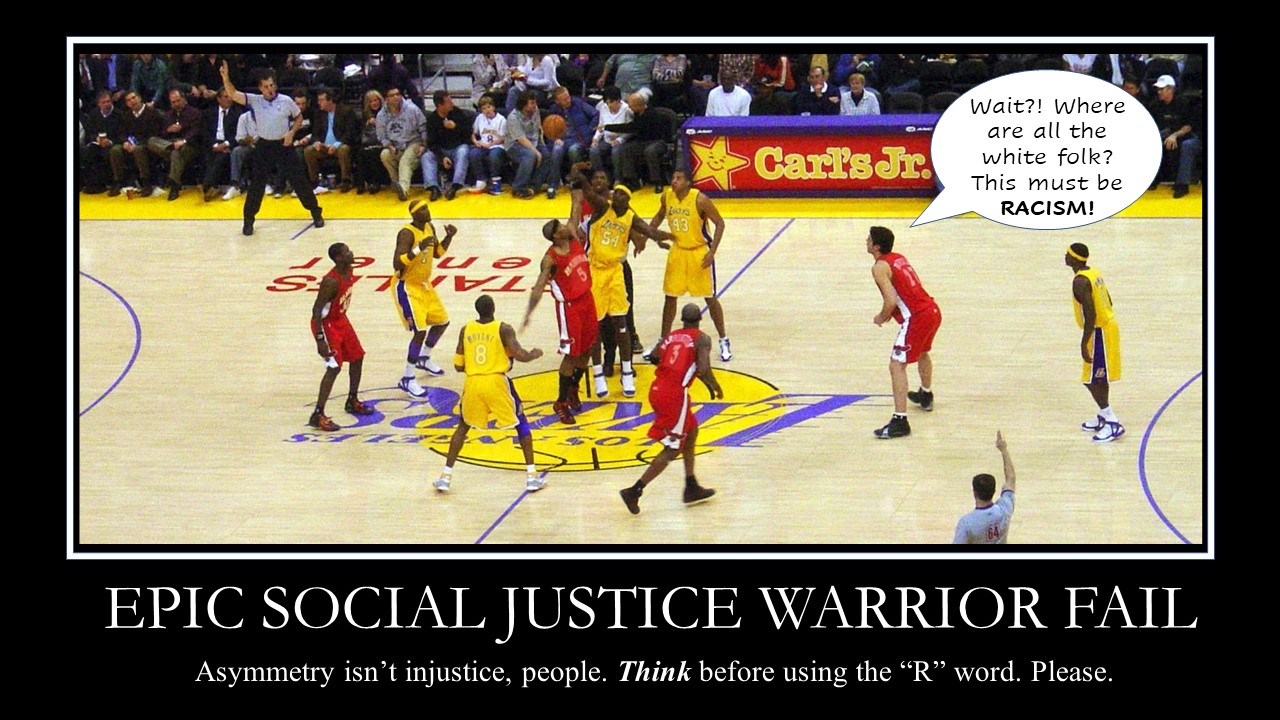
To be sure, to suggest that these trajectories are somehow the result, or product, of a given community’s skin color–as was claimed of some people groups by much of the American intelligentsia in the first half of the 20th century (see here)–is definitively racist and utterly vile, not to mention completely asinine.
But Ezra-Nehemiah depicts a discriminated, heavily taxed “minority” community of faith that is–and this is altogether vital to understand–largely but not exclusively ethnically Jewish, a community that, as was just discussed, was deeply aware of its own cross-generational failings and, thus, of its need to engage in a very countercultural, as well as counterintuitive, project of individual and communal spiritual renewal.
Why?
To alter its past trajectory of moral and social decline.
Because of the perceived very countercultural nature of this trajectory, we witness in Ezra-Nehemiah a fierce commitment to an indefinite communal separation, evidenced liturgically (in worship), economically (via Sabbath observance and cancelation of debts), and socially (via the ban on intermarriage). Again, on several occasions Ezra-Nehemiah makes plain that living among these former Jewish exiles were other ethnicities and “those of mixed ancestry” who, it seems, “had separated themselves from the unclean practices of their Gentile neighbors in order to seek the LORD, the God of Israel” (Ezra 6.21), who at the time of Passover participated alongside the Jews, just as the Torah’s Passover statutes emphatically state.
These non-Jewish people groups even participate in the covenant renewal ceremony that serves as a (or the?) climactic moment in Ezra-Nehemiah: all who “separated themselves from the neighboring peoples for the sake of the Law of God, together with their wives and all their sons and daughters…join their fellow Israelites [lit.: brothers!], the nobles, and bind themselves with a curse and an oath to follow the Law of God…” (Neh. 10.28-29).
Undeniably, then, this vital principle of communal separation is based on a distinct allegiance and ethic, not on a distinct ethnicity.
At least in theory.
Not surprisingly, if tragically, in practice this separation is much more difficult, especially when applied retroactively, as narrated in Ezra 9-10. Heart-breaking ethical compromise not uncommonly leads to mind-bending ethical complexity. Part of this complexity is found in the confusion of probability and prejudice, of statistics and stereotype.
To jump straight into our present cultural moment, consider the reflections of Afro-American journalist Jason Riley of the Wall Street Journal: “Like so many other young black men, I was also followed in department stores, saw people cross the street as I approached, and watched women clutch their purses in elevators when they didn’t simply decide to ride a different one. It was part of growing up…. Was I profiled based on negative stereotypes about young black men? Almost certainly. But then everyone profiles based on limited knowledge, including me. In high school I worked as a stock boy in a supermarket. The people caught stealing were almost always black. As a result black shoppers got more scrutiny from everyone, including black workers…. Similarly, when I see groups of young black men walking down the street at night I cross to the other side…. I am not judging them as individuals. Why take the risk? If I guess wrong my wife is a widow and my children are fatherless. So I make snap judgments with incomplete information.”
So where does probability end and prejudice begin? Where does the discernment of moral danger end and discrimination toward different skin color begin?
More generally, in Ezra-Nehemiah when is communal separatism a a perverse symptom of ethnic superiority and when is it a noble signal of ethical sobriety, a recognition that spiritual allegiances, ethical commitments, and social values are protected, promoted, and passed on communally? In its (perhaps very) imperfect practice, the religious separatism of Ezra-Nehemiah is altogether scandalous to its “cultured despisers” of our own day, who, in my opinion, have taken their eyes off what the leaders of the black movement of the 1960s could not help but see–a humanity whose souls and systems were so hopelessly enslaved to sin that their only solace was in the stories and statutes of Israel’s God, statutes that insisted that His servants be separate from the world, not out of superiority to the world but rather in sacrificial service to it.

 Hope Unbroken
Excellent thoughts were brought forth from Ezra-Nehemiah to the modern-day context. Great points were made on the idolatry of personal/individual freedom and Christians buying into these ideologies/myths. Yet, the application to modern-day politics needs to be carefully made noting that the Christian church in America resides in one of the strongest constitutional democracies in the world. Christians do bear responsibility in such a political milieu to vote, or some may even sense a call to engage in politics to uphold the kingdom values. J.I. Packer begins one of his classic articles on politics – https://www.christianitytoday.com/ct/1985/april-19/how-to-recognize-christian-citizen.html?share=j%2bgMfa79%2fYlaoGVl8BW10unc4q5f1US7, by saying ‘ it is a paradox of the Christian life that the more profoundly one is concerned about heaven, the more deeply one cares about God’s will being done on Earth.’ Later Packer goes on to say the biblical basis for public activism and why democracy is a better form of government than anything else formulated by humans.
God’s people’s yearning for Yahweh’s presence (i.e. the building of the temple, altar), heart-felt exclusive worship, humble confession/repentance, the celebration of the Passover, the prominence of the word – prophecies of Haggai and Zechariah, reading of the law, are great reminders for the church today existing in a pluralistic, secular world to seek our identity in God and God alone. The Gospel reminds us that God incarnated to dwell (‘put His tent’) among us (John 1:14) and our allegiance is to a kingdom not of this world but that encompasses this world (John 3:16).
The Persian emperors – Cyrus, Darius, and others, were mere agents/’puppets’ in the hand of Yahweh but I would not call them Gentile proselytes or ‘God-fearers’ as these terms clearly qualified in the NT language (e.g. Acts 10 – Cornelius, Luke 7 – the Centurian, Acts 8 – Ethiopian eunuch) as genuine seekers of God who eventually find fulfillment in their search. Finally, we have to be aware that stereotyping and implicit biases are human survival tendencies and consciously work against prejudice and racist tendencies in us, however costly that might be. The first victim of prejudice is God in the Garden by our parents in their rebellion.